

- Medicines
- Personal Care
- Skin Cream
- Sunscreen
- Face Wash
- Skin and Body Soap
- Acne Care
- Body Lotions
- Moisturising Lotion
- Moisturising Cream
- Mosquito Repellent
- Moisturising Gel
- Body Wash
- Hair Oils
- Hair Shampoo
- Hair Conditioners
- Hair Supplements
- Hair Colour
- Hair Serum
- Hair Mask
- Hair Solutions
- Baby Diapers and Wipes
- Baby Lotion and Moisturising Cream
- Baby Bath Essentials
- Baby Skin Care
- Baby and Infant Food
- Baby Healthcare
- Women Multivitamins
- Ovulation Test Kit and Women Intimate Care
- Sanitary Pads
- Nutritional Drinks
- Condoms
- Lubricants
- Massage Gels
- Personal Body Massagers
- Men Performance Booster
- Sexual Health Supplements
- Massage Oils
- Ayurveda
- Tooth Paste
- Mouth Ulcer Gel
- Mouthwash
- Toothache and Gum Pain
- Tooth Brush
- Gargle Solution
- Orthopaedic Supports
- Adult Diapers
- Footwear
- Mobility and Support Accessories
- Urinary Support and Care
- Health Conditions
- Bone and Joint Care
- Digestive Care
- Eye Care
- Pain Relief
- Smoking Cessation
- Liver Care
- Stomach Care
- Cold and Cough
- Heart Care
- Kidney Care
- Piles, Fissures & Fistula
- Respiratory Care
- Mental Wellness
- Derma Care
- Pre and Probiotics
- Acidity
- Gas
- Constipation
- Loose Motion/Diarrhoea
- Digestive Fibres
- Digestive Enzymes
- Eye Lubricant Drops
- Lens Solution
- Safety Eye Wear
- Eye Cream
- Eye Vitamins and Supplements
- Eye Drops
- Eye Ointment and Gel
- Nicotine Patch
- Nicotine Gum
- Nicotine Lozenges
- Cough Syrups
- Chest Rubs and Balms
- Nasal Spray
- Lozenges
- Inhalant Capsules
- Cold and Cough Tablets
- Vitamins & Supplements
- Diabetes Care
- Healthcare Devices
- Homeopathic Medicine
- Health Guide
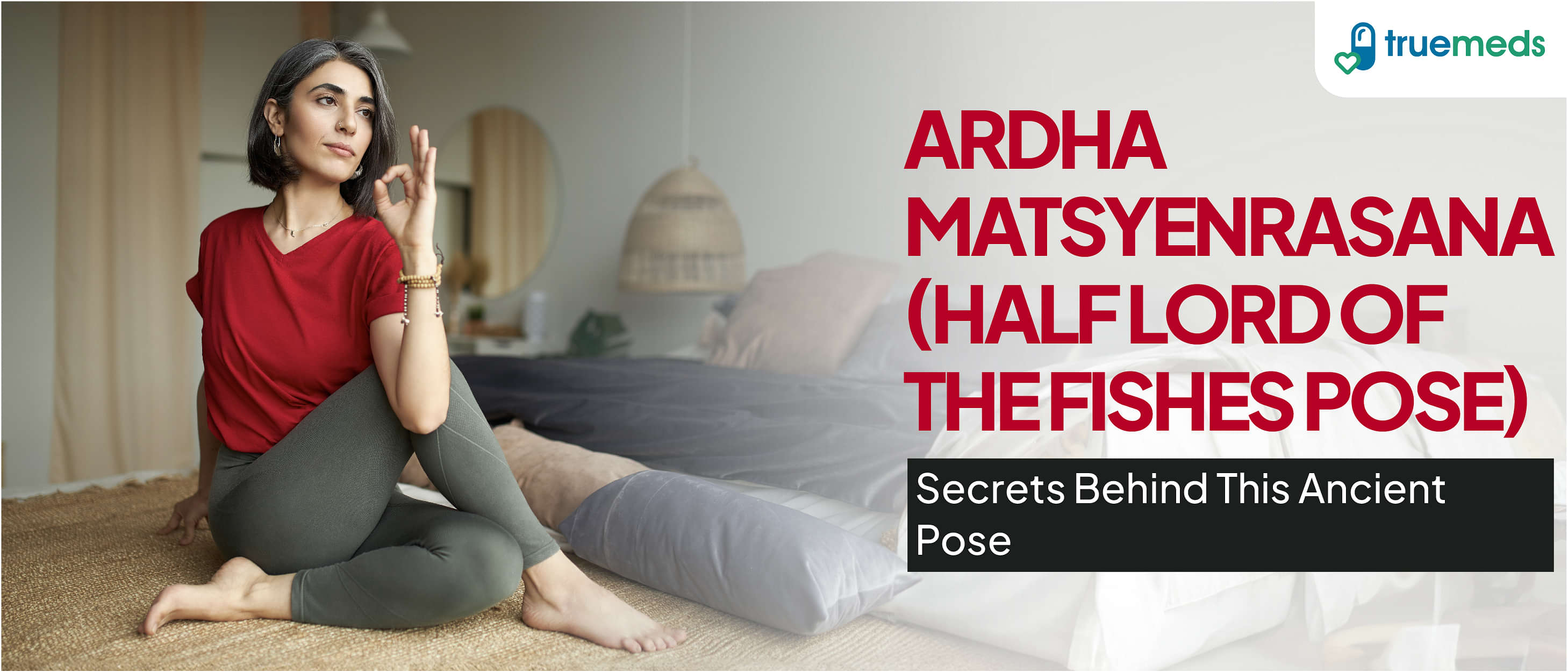
Benefits of Ardha Matsyendrasana and How to Do It
Last updated on : 19 Nov, 2025
Read time : 9 min
Ardha Matsyendrasana, also known as the Half Lord of the Fishes Pose, is a seated yoga twist that is valued in Hatha yoga for its potential to support spinal mobility and promote body awareness. Practiced mindfully, this pose may help gently stretch the back muscles, encourage a sense of grounding, and alleviate mild stiffness from prolonged sitting [1]. In this guide, we’ll explore the potential benefits of Ardha Matsyendrasana and provide step-by-step instructions to help you perform it safely and mindfully.
What is Ardha Matsyendrasana?
Ardha Matsyendrasana is a Sanskrit term that translates to ‘Half Lord of the Fishes Pose’. The word ‘Ardha’ means ‘half’, ‘Matsya’ means ‘fish’, and ‘Indra’ means ‘king’ or ‘lord’. This pose is named after the yogic sage Matsyendra and is celebrated for its inclusion in foundational Hatha yoga texts for its effects on the physical body and subtle energy channels.
This pose is a deep, seated twist that may gently mobilize the spine, stimulate the abdominal organs, and improve postural awareness. By practising this pose regularly, you can work on enhancing spinal range of motion and gently engaging the muscles that support the core and back.
How Does Ardha Matsyendrasana Help?
This pose provides potential benefits for both the body and mind. Practising this seated twist may help improve flexibility, ease tension, and encourage mental calmness. It can be a gentle way to relieve stiffness, particularly in the lower back and shoulders, often associated with prolonged sitting, and create a sense of balance and focus [2].
Did You Know? Ardha Matsyendrasana is a seated twist in yoga with its origins in ancient India. Named after the sage Matsyendranath, one of the early founders of Hatha yoga, the pose symbolises introspection and balance. Ardha Matsyendrasana is mentioned in classical texts such as the Hatha Yoga Pradipika (15th century), where it’s lauded for enhancing digestion and purifying energy channels. Traditionally, twists like this were believed to balance the body’s energies and aid in meditation. Today, it is a popular asana in yoga practices worldwide, appreciated for gently promoting spinal flexibility and supporting organ function.
How to Do Ardha Matsyendrasana Step-by-Step
To reap the benefits of Ardha Matsyendrasana, it is essential to perform the pose correctly. Follow these step-by-step instructions to ensure proper alignment and maximum effectiveness:
- Getting Into the Posture
- Start by sitting in Dandasana (Staff Pose) with your legs extended and your spine straight.
- Bend your left leg and place the left foot flat beside your right hip.
- Cross your right leg over the left knee, placing the right foot flat on the floor, outside of the left thigh. Ensure both sitting bones are grounded as much as possible.
- Arm and Hand Placement
- Place your right hand behind you, a few inches away from the body, for balance and to assist the spinal lift.
- Inhale to lengthen the spine, then exhale to begin the twist to the right. You can either hook your left elbow over the outside of the right knee or gently hold the right knee with the left hand.
- Slowly twist your waist, shoulders, and neck to the right, gazing over your right shoulder.
- Ensure that your spine remains long and lifted throughout the pose.
- Maintaining the Posture
- Hold the pose while taking slow, deep breaths.
- Keep your shoulders relaxed and your chest open.
- Focus the twisting effort from the base of the spine up, rather than just the neck.
- Getting Out of the Posture
- As you exhale, slowly release the right hand that is behind you.
- Turn your waist, chest, and neck back to the starting position.
- Sit up straight and relax, then repeat the pose on the other side by reversing the leg and arm positions.
Ardha Matsyendrasana Potential Benefits for Body and Mind
This pose is a potent yoga asana that offers numerous potential benefits when practised consistently and correctly.
Supports Spinal Mobility and Comfort:
Ardha Matsyendrasana is an excellent pose for gently increasing spinal flexibility. The twisting motion stretches and engages the muscles surrounding the spine, which may help alleviate common muscle stiffness and discomfort, particularly in the mid-to-lower back region [2].
Enhances Digestive Awareness:
The gentle compression and decompression created by the twist may encourage gentle movement in the abdominal area. Regular practice can enhance body awareness and support overall digestive comfort. It is important to understand that yoga is a complementary practice and is not a treatment for any specific medical condition. Consult a healthcare professional if you have persistent or serious digestive concerns.
May Support Organ Function and Circulation:
The pose is traditionally believed to stimulate the abdominal organs, including the liver and kidneys, by momentarily compressing and then releasing them, which may lead to improved circulation to these areas upon release. However, the claim of “detoxification” should be understood in a traditional yoga context, which is not a substitute for the body’s natural detoxification systems.
Strengthens Core and Back Muscles:
This twist helps to gently engage and strengthen your oblique and intercostal muscles (core and side body muscles). This action supports the spine, improves stability, and can contribute to a feeling of a stronger and more supported torso [3].
Encourages Relaxation and Stress Relief:
Practising this pose with deep, measured breathing can have a calming effect on the nervous system, which may help reduce feelings of stress and anxiety [2]. The combination of physical focus and breath control helps quiet the mind and promote relaxation, leading to a clearer and more tranquil state of awareness.
May Improve Posture:
Regular practice of this pose helps to counteract the forward slump often associated with desk work. By gently strengthening the core and improving spinal flexibility, it becomes easier to sit and stand with an upright, lengthened spine, which can contribute to feeling more comfortable and energised [3].
Precautions to Take While Practising Ardha Matsyendrasana
When practising Ardha Matsyendrasana, it is essential to keep certain precautions in mind to ensure a safe and beneficial experience:
- Always practice on an empty stomach or at least 2-3 hours after a light meal to avoid discomfort.
- Perform a thorough warm-up of the spine, hips, and shoulders before attempting the pose to prepare the joints and muscles for the twist.
- Gradually progress into the pose, twisting only from the navel up. Respect your body’s natural limitations and avoid forcing or jerking the twist.
- Always consult with a doctor or experienced yoga practitioner before attempting this pose, especially if you have any pre-existing medical conditions, such as uncontrolled high blood pressure, stomach ulcers, or recent abdominal surgery.
- Additionally, if you are new to this pose, only practise it under the guidance of a certified yoga instructor until you master the proper alignment to prevent injury.
Who Should Avoid Doing Ardha Matsyendrasana?
Despite its numerous benefits, this pose is not suitable for everyone due to its intense spinal twist and potential impact on various bodily systems. Individuals with the following conditions should exercise extreme caution or avoid the pose entirely:
- Pregnant women, especially in the later months, must avoid this deep twist. In the early stages, modified versions should only be practised under expert guidance.
- Individuals with active or acute spinal injuries, recent spinal surgeries, or severe, persistent back pain should strictly avoid this pose.
- Those with severe slipped disc (herniation) issues should avoid this pose entirely. Individuals with mild, stable disc issues must practice with extreme caution and only with a doctor’s and yoga therapist’s approval.
- Individuals recovering from recent abdominal surgery, or those with certain acute conditions like uncontrolled vertigo, or severe headache/migraine should avoid or modify the pose.
- Seniors or people with severe arthritis or weak joints should approach this pose carefully, and modifications (like sitting on a cushion or using a wall for support) may be necessary to make it safer.
In conclusion, Ardha Matsyendrasana is a potent yoga asana that offers numerous benefits for the body and mind. From improving spinal mobility and supporting digestion to reducing stress and anxiety, this pose can be a valuable addition to your yoga practice. It is paramount to approach this asana with caution, respect its contraindications, and practice with mindful awareness. By practising this asana mindfully and under proper guidance, you can unlock its potential to transform your physical and mental well-being.
Frequently Asked Questions (FAQs)
What are the mental health benefits of Ardha Matsyendrasana?
This pose may support mental health by reducing feelings of stress and anxiety, promoting relaxation, improving concentration, and enhancing mental clarity through its focus on deep breathing and mindful engagement [2].
How long should one hold Ardha Matsyendrasana?
Hold Ardha Matsyendrasana for 30 seconds to one minute per side, focusing on steady breath, gradually increasing duration as flexibility and comfort improve.
Is Ardha Matsyendrasana suitable for beginners?
Due to the complex spinal rotation and leg positioning, it is generally considered an intermediate-level pose. Beginners should learn a milder twist (like Bharadvajasana or a simple supine twist) first and only attempt this one under the guidance of a qualified instructor.
Which lifestyle condition might Ardha Matsyendrasana help support?
Ardha Matsyendrasana may complement the management plan for Type 2 Diabetes Mellitus (T2DM) by traditionally stimulating the pancreas and improving metabolic functions; however, research suggests consistent yoga practice is generally beneficial rather than this single pose being a “cure” [4]. It is not a substitute for medication or medical management of T2DM.
References
[1] Saraswati, S. S. (2002). Asana Pranayama Mudra Bandha. Yoga Publications Trust, Munger, Bihar, India. https://ia800404.us.archive.org/21/items/llvg_asana-pranayama-mudra-and-bandha/asana-pranayama-mudra-and-bandha.pdf
[2] Lee, M., Moon, W., & Kim, J. (2014). Effect of Yoga on Pain, Brain-Derived Neurotrophic Factor, and Serotonin in Premenopausal Women with Chronic Low Back Pain. Evidence-Based Complementary and Alternative Medicine, 2014, 1–7. https://doi.org/10.1155/2014/203173
[3] Saharan, A., & Kumar, A. (2023). Research-based explanation of the benefits of yoga asanas described in hathapradipika. International Journal of Yogic, Human Movement and Sports Sciences, 8(1), 149–153. https://www.theyogicjournal.com/pdf/2023/vol8issue1/PartC/8-1-33-714.pdf
[4] Effect of a single yoga asana on blood glucose levels in Type 2 diabetes mellitus: A Self-Controlled Study. (2023). PubMed. https://pubmed.ncbi.nlm.nih.gov/37315227/















Disclaimer
Our healthcare experts have carefully reviewed and compiled the information presented here to ensure accuracy and trustworthiness. It is important to note that this information serves as a general overview of the topic and is for informational purposes only. It is not intended to diagnose, prevent, or cure any health problem. This page does not establish a doctor-patient relationship, nor does it replace the advice or consultation of a registered medical practitioner. We recommend seeking guidance from your registered medical practitioner for any questions or concerns regarding your medical condition.
Popular Articles

Recommended Articles




Recent Articles









Company
About UsHealth ArticleHealth StoriesHealth LibraryDiseases & Health ConditionsAyurvedaAll MedicinesAll BrandsNeed HelpFAQSecuritySubscribe
Registered Office Address
Grievance Officer
Download Truemeds


Contact Us
Our customer representative team is available 7 days a week from 9 am - 9 pm.
v4.9.0

2025 - Truemeds | All rights reserved. Our content is for informational purposes only. See additional information.

Our Payment Partners