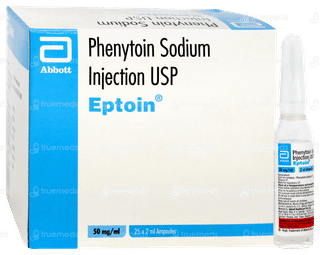
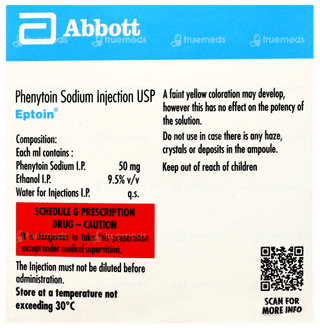


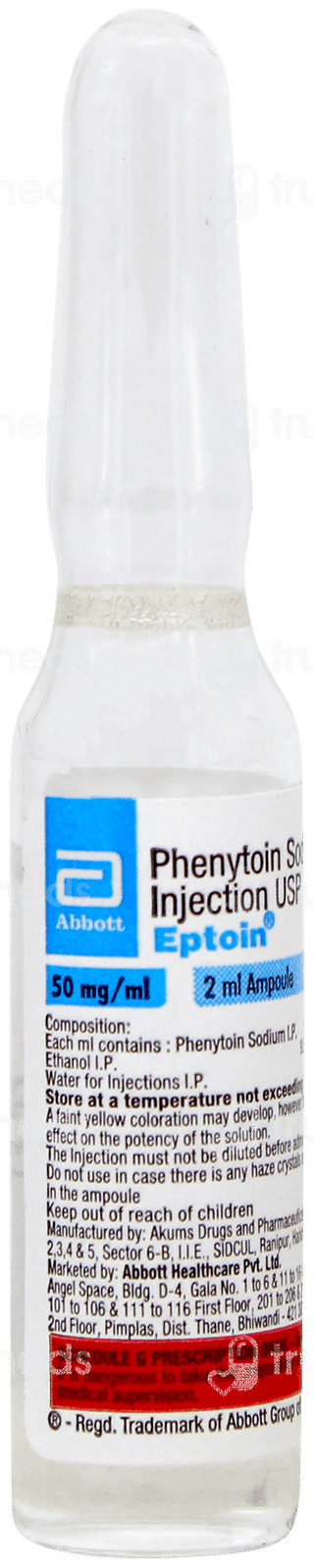

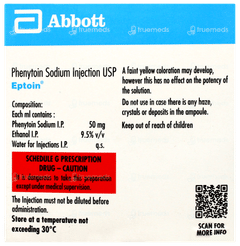


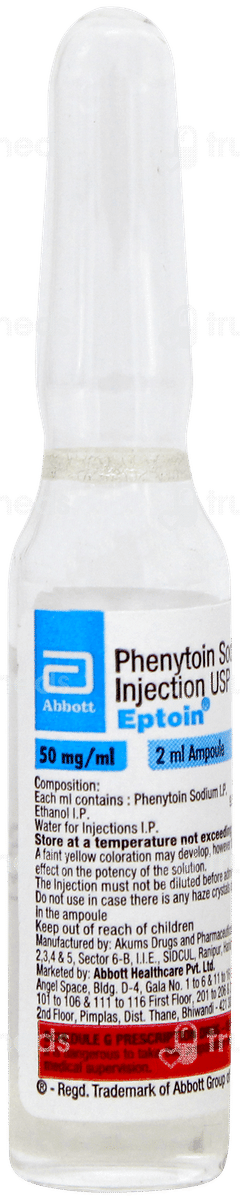
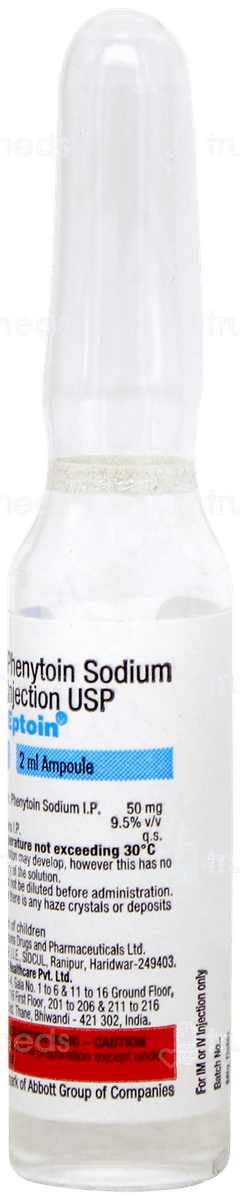


 Composition
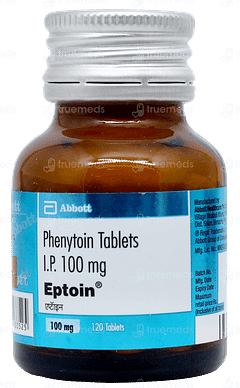
Eptoin Injection is used to control generalised tonic-clonic seizures (fits with stiffening and jerking of the body) and status epilepticus, which means seizures that are prolonged or keep coming back. It is also used to prevent and treat seizures during and after brain surgery. It contains phenytoin, an anti-seizure medicine that steadies abnormal electrical activity in the brain. It is given only under medical supervision.
Eptoin Injection is given by a doctor or nurse as a slow injection or infusion into a vein. The rate is controlled carefully, as giving it too fast can seriously affect the heart. Your heart rhythm, blood pressure and blood levels of the medicine are monitored during treatment. Follow your doctor's prescribed dose and duration. Do not stop anti-seizure treatment suddenly unless your doctor advises you to. Tell the care team at once if you feel pain, burning or swelling at the injection site.
Common side effects of Eptoin Injection include pain and redness at the injection site, uncontrolled eye movements, unsteadiness, drowsiness, confusion and slurred speech. Mild effects may settle during treatment. Inform your doctor if symptoms persist or worsen. Tell the care team right away if you feel dizzy or faint, or notice a slow or irregular heartbeat. Get emergency help for a severe rash with blisters, swelling of the face, or yellow skin or eyes.
Before receiving Eptoin Injection, tell your doctor about heart disease, a slow heart rate, low blood pressure, liver problems or porphyria. Mention all medicines, supplements and herbal products you take, especially warfarin (a blood thinner), other anti-seizure medicines and hormonal contraceptives. Tell your doctor if you are pregnant, planning pregnancy or breastfeeding, as your treatment will need careful review. Do not drive if you feel drowsy or unsteady.