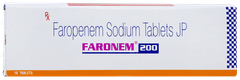
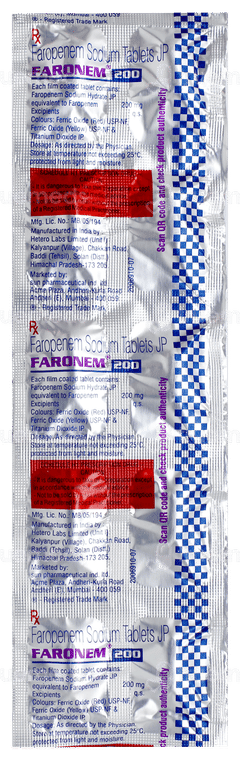

 Composition
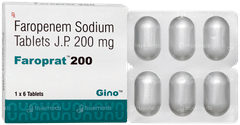
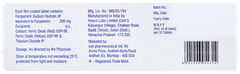
Faronem 200 Tablet 10 contains faropenem (a penem-class beta-lactam antibiotic). It is used to treat susceptible bacterial infections affecting the respiratory tract, urinary tract, skin and soft tissues. Faropenem interferes with bacterial cell-wall synthesis, leading to bacterial death. Take the tablet orally at the dose and frequency prescribed by your doctor. It may be taken with or without food. Common side effects include nausea, diarrhoea, abdominal pain and skin rash. Tell your doctor about allergies to beta-lactam antibiotics, kidney disease or previous antibiotic-associated colitis. This antibiotic does not treat viral infections. Complete the prescribed treatment course unless your doctor instructs otherwise.
Faronem 200 Tablet 10 is prescribed for bacterial infections caused by organisms susceptible to faropenem. These may include sinusitis, bronchitis, pneumonia, urinary tract infections and skin infections. Treatment selection depends on the suspected organism, infection site and clinical findings. Antibiotics should be used only when a bacterial infection warrants them. This tablet does not relieve colds, influenza or other viral illnesses. Your doctor may revise treatment following test results.
Take Faronem 200 Tablet 10 orally as instructed by your doctor. Swallow the tablet with water; do not alter the dosage form without professional advice. It can generally be taken with or without food. Follow the prescribed dose, frequency and treatment duration. Do not skip doses or stop early simply because symptoms improve. Ask your doctor or pharmacist what to do following a missed dose; never double doses.
Common side effects of Faronem 200 Tablet 10 include nausea, diarrhoea, abdominal discomfort and skin rash. Some patients may also experience vomiting, headache or changes in bowel habits. Mild symptoms may settle during treatment. Contact your doctor if adverse effects persist or worsen. Severe watery diarrhoea, bloody stools or a widespread rash require prompt assessment. Facial swelling, wheezing or breathing difficulty may indicate a serious allergy requiring emergency care.
Before taking Faronem 200 Tablet 10, tell your doctor about penicillin or cephalosporin allergies, kidney disease or previous colitis. Mention other treatments, especially sodium valproate, because some beta-lactam antibiotics can reduce its concentrations. Tell your clinician if you are pregnant or breastfeeding. Kidney impairment may require dose adjustment. Avoid using leftover antibiotics or sharing tablets. Seek urgent help if severe allergy symptoms develop during treatment.