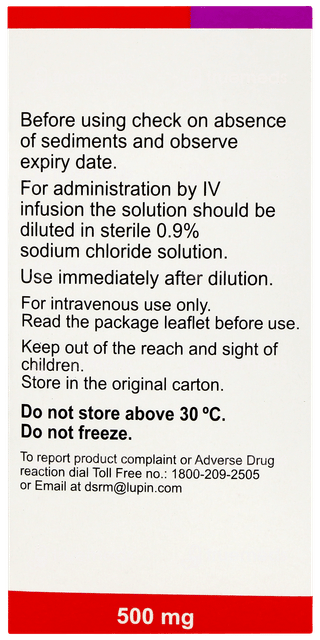
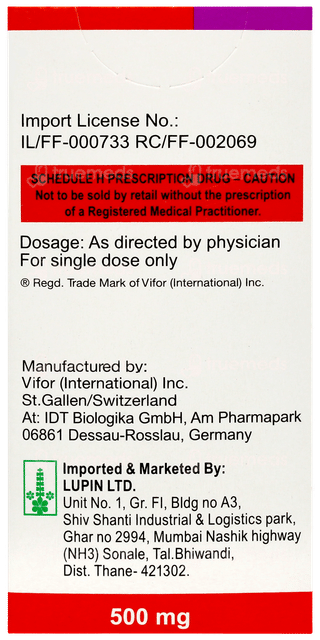
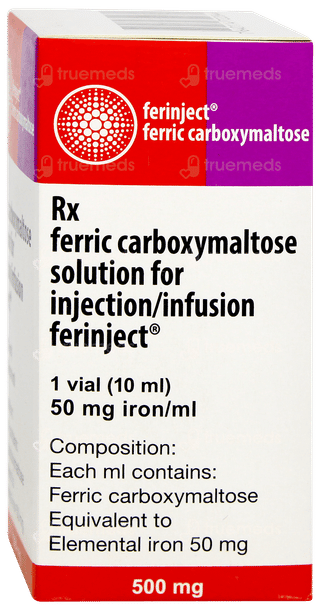
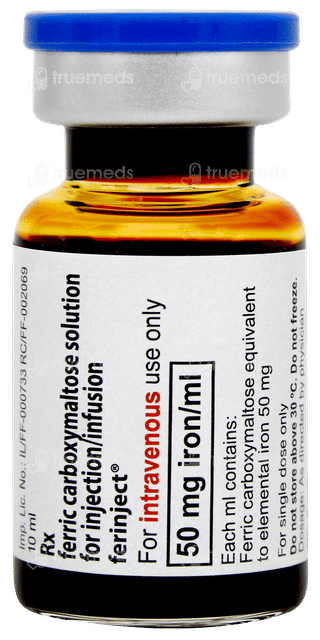
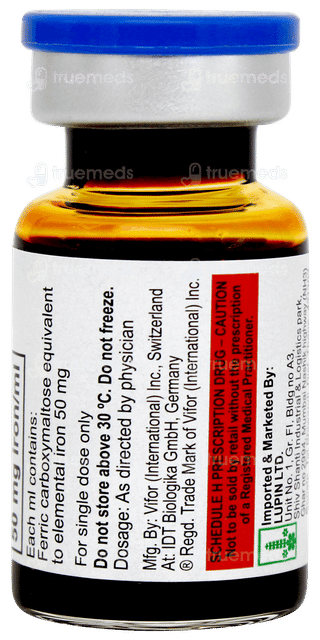
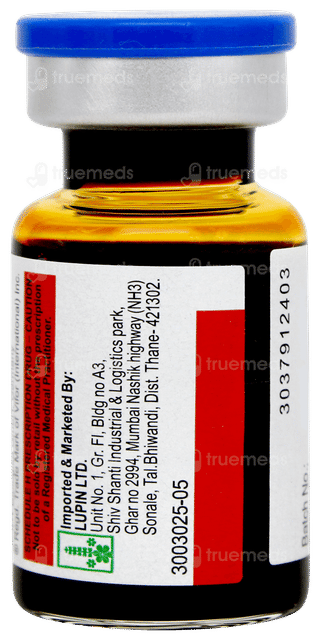
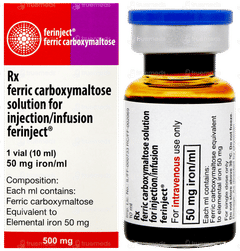
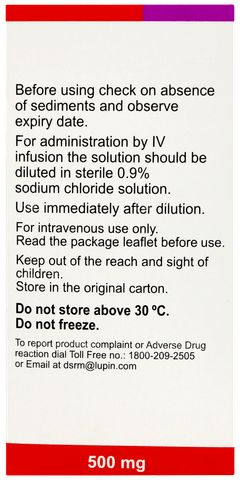
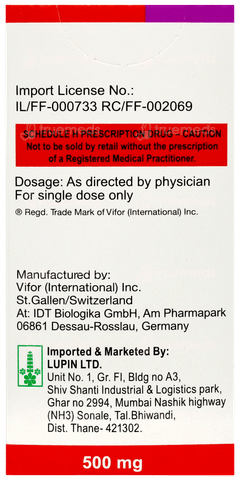
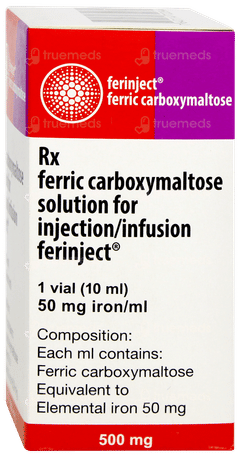
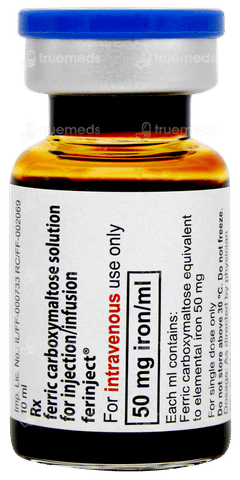
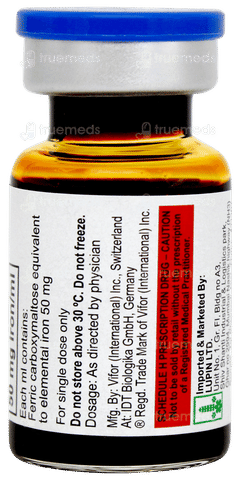
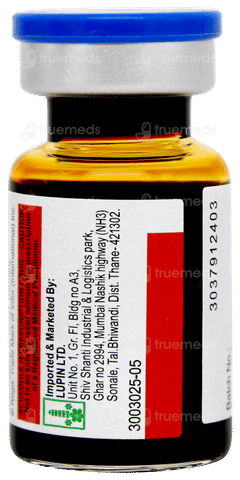


 Composition
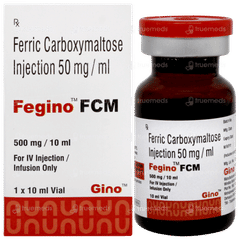
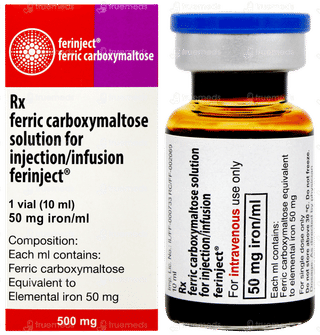
Ferinject Injection is used to treat iron deficiency anaemia in adults and adolescents who cannot tolerate iron tablets or have not improved with them. It quickly replaces low iron stores and raises haemoglobin levels. It relieves the tiredness, weakness and breathlessness caused by low iron. It is given in a clinic or hospital under medical care, and your doctor will decide if it is right for you.
Ferinject Injection is given by a doctor or nurse as an injection or a slow drip into a vein. You will be watched during and after the injection. Follow your doctor's prescribed dose and duration. Your doctor will plan follow-up blood tests, so attend them. Eating iron-rich foods such as leafy greens and lentils can support your recovery. Tell your doctor or nurse at once if you feel unwell.
Common side effects of Ferinject Injection include nausea, headache, dizziness, flushing, a temporary rise in blood pressure, and pain, redness or irritation at the injection site. Mild effects may settle during treatment. Inform your doctor if symptoms persist or worsen. Tell your doctor or nurse at once if you feel faint, get a rash or find it hard to breathe. Never increase or reduce your dose without medical advice.
Before using Ferinject Injection, tell your doctor about iron overload, liver disease, infections or any allergy to iron preparations. Mention all medicines and supplements you take, including iron tablets. Consult your doctor if pregnant or breastfeeding. Tell your doctor or nurse at once if you feel unwell during or after the injection. Your doctor will check your blood iron levels and haemoglobin during treatment.