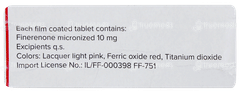


 Composition
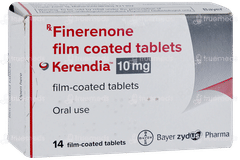
Kerendia 10 Tablet is used to slow the progression of chronic kidney disease (CKD) linked to type 2 diabetes in adults. It helps lower the risk of kidney failure, heart attacks and hospital stays for heart failure. It does not cure kidney disease. See a doctor soon if you have muscle weakness, an irregular heartbeat or unusual tiredness. Regular blood tests will be needed.
Take Kerendia 10 Tablet with or without food, as prescribed. Follow your doctor's prescribed dose and duration. Your doctor will arrange regular blood tests to check your potassium level and kidney function. Follow your diabetic diet and avoid grapefruit and grapefruit juice. Limit potassium-rich salt substitutes as advised. Keep taking it even when you feel well. Do not double a missed dose.
Common side effects of Kerendia 10 Tablet include high blood potassium, low blood pressure, mild dizziness, low blood sodium, headache and feeling sick. Mild effects may settle during treatment. Inform your doctor if symptoms persist or worsen. Tell your doctor right away if you notice muscle weakness or an irregular heartbeat. Never increase or reduce your dose without medical advice.
Before using Kerendia 10 Tablet, tell your doctor about high blood potassium, severe kidney failure or adrenal problems. Mention all medicines, supplements and herbal products you take, especially other blood pressure medicines, potassium supplements, antifungals and some antibiotics. Consult your doctor if you are pregnant or breastfeeding. Tell your doctor if you have recently had vomiting or diarrhoea. Tell your doctor if you plan any surgery.