





 Composition
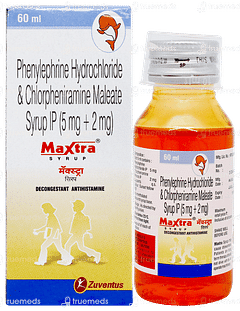
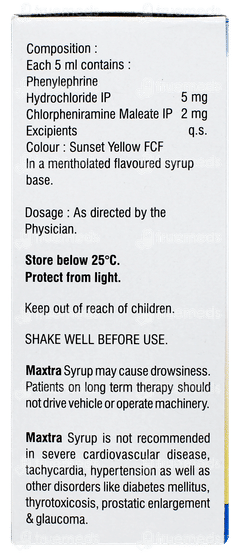
Maxtra Syrup contains chlorpheniramine (a first-generation antihistamine) and phenylephrine (an alpha-adrenergic agonist). It is used for symptomatic relief of selected cold and allergy symptoms, including sneezing, a runny nose and watery eyes. Chlorpheniramine blocks histamine H1 receptors, reducing histamine-related symptoms. Phenylephrine constricts blood vessels, although current evidence does not support oral phenylephrine's effectiveness for nasal congestion. Give the syrup only according to age-appropriate medical advice. Possible side effects include drowsiness, dry mouth, dizziness and restlessness. Tell the doctor about heart disease, high blood pressure, thyroid disorders or glaucoma. Young children are particularly vulnerable to serious adverse effects from cough-and-cold combinations.
Maxtra Syrup is a combination medicine intended to relieve selected symptoms of upper respiratory allergies and common colds. Chlorpheniramine may reduce sneezing, nasal itching and watery eyes. However, evidence does not establish that the oral phenylephrine component effectively relieves nasal blockage. The syrup does not cure viral infections or shorten their duration. Children with persistent fever, breathing difficulties or worsening symptoms require medical assessment. Supportive care may be more appropriate for uncomplicated colds.
Give Maxtra Syrup exactly as directed by the child's doctor. Measure the prescribed amount using an oral syringe or suitable measuring cup. Do not use household spoons or estimate the amount. Check the child's age and the product's concentration before administration. Avoid combining it with other cold, allergy or antihistamine preparations without medical advice. Do not increase the amount if symptoms persist. Follow the prescribed duration and seek reassessment if symptoms worsen.
Possible side effects of Maxtra Syrup include drowsiness, dizziness, dry mouth, nausea and stomach discomfort. Some children may experience paradoxical excitement, irritability, restlessness or difficulty sleeping. Phenylephrine may cause palpitations, increased blood pressure or nervousness. Inform the doctor if these effects persist or become troublesome. Seek urgent medical attention for severe agitation, seizures, breathing difficulties or an irregular heartbeat. Excessive administration can cause serious toxicity, especially in young children.
Before giving Maxtra Syrup, tell the doctor about heart disease, hypertension, thyroid disorders, diabetes, glaucoma or difficulty passing urine. Mention liver disease, kidney problems and other medicines that may cause drowsiness. Do not combine it with monoamine oxidase inhibitors without specialist advice. Avoid giving cough-and-cold combinations to children below four years without medical direction; stricter age restrictions may apply. Discuss use during pregnancy or breastfeeding when relevant. Keep the syrup securely away from children.