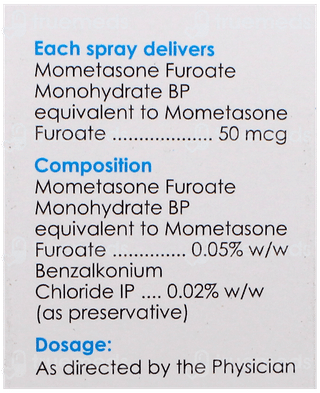
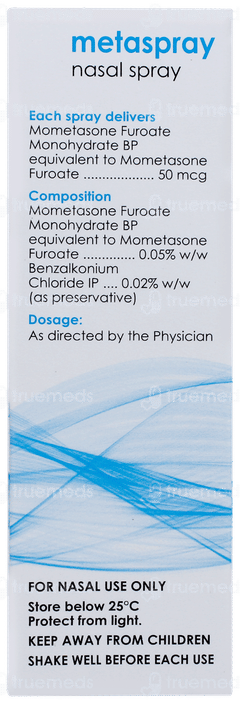
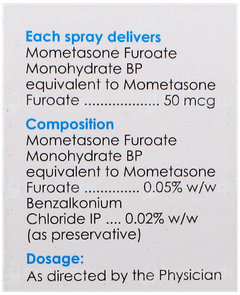

 Composition
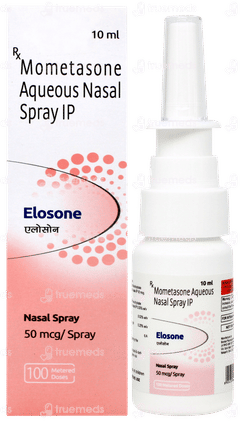
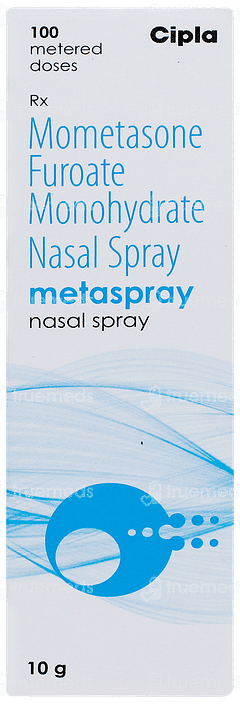
Metaspray Nasal Spray is used to manage allergic rhinitis caused by triggers such as pollen, dust mites and animal allergens. It can relieve nasal congestion, sneezing, itching and discharge when used consistently as prescribed. It works locally inside the nose and is not intended to provide immediate relief like a fast-acting nasal decongestant. Some improvement may occur early, but full symptom control can take longer. Your doctor will determine the appropriate treatment duration according to your allergy symptoms.
Use Metaspray Nasal Spray exactly as prescribed by your doctor. Gently blow your nose before use and shake or prime the bottle according to the product instructions. Keep your head slightly forward, insert the nozzle into one nostril and aim it away from the nasal septum. Operate the spray while breathing in gently, then breathe out through your mouth. Repeat as directed for the other nostril. Avoid spraying into the eyes. Clean the nozzle as instructed and do not share the bottle.
Possible side effects of Metaspray Nasal Spray include nosebleeds, nasal burning or irritation, headache, sneezing and sore throat. Some patients may develop nasal dryness or ulceration. Rare complications include nasal septum perforation, fungal infection of the nose or throat, and increased eye pressure. Prolonged use of high corticosteroid doses may cause systemic effects, particularly in children. Contact your doctor for persistent nosebleeds, nasal sores or visual changes. Seek urgent medical attention for a serious allergic reaction.
Before using Metaspray Nasal Spray, tell your doctor about recent nasal surgery, injury, untreated nasal infection, tuberculosis or previous reactions to mometasone. The spray should generally be avoided until nasal wounds have healed. Mention glaucoma, cataracts and other corticosteroid treatments. Discuss pregnancy and breastfeeding before use. Children receiving prolonged treatment may require growth monitoring. Your doctor should review treatment if symptoms remain uncontrolled or significant nasal irritation develops.