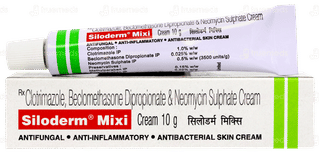
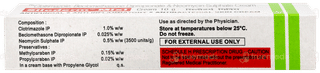
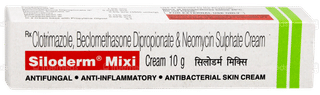
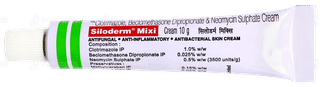

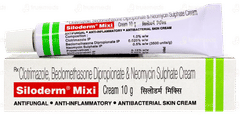
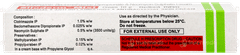
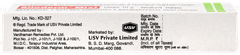
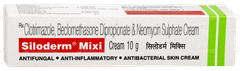
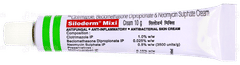

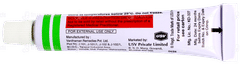

 Composition
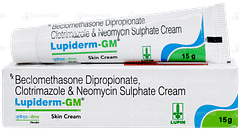
Siloderm Mixi Cream may be considered for selected cases of inflamed dermatitis or eczema complicated by a superficial infection. Its suitability depends on the organisms involved, the severity of inflammation and the affected area. It is not appropriate for every skin rash, and uncomplicated contact dermatitis, fungal infection or nappy rash does not automatically require this combination. A doctor should assess persistent or spreading lesions before treatment to determine whether a steroid, antibiotic or antifungal is needed.
Apply Siloderm Mixi Cream exactly as prescribed by your doctor. Clean and gently dry the affected area before spreading a thin layer over the skin. Wash your hands afterwards unless they are being treated. Avoid the eyes, mouth, mucous membranes and broken skin unless specifically advised. Do not cover the area with airtight dressings. Avoid applying it to the face, groin or skin folds without medical supervision. Use it only for the prescribed duration.
Possible side effects of Siloderm Mixi Cream include burning, stinging, itching, redness and dryness at the application site. Neomycin may cause allergic contact dermatitis in susceptible patients. Prolonged or excessive corticosteroid exposure can cause skin thinning, stretch marks and changes in pigmentation. The steroid may also conceal signs of worsening infection. Contact your doctor if irritation becomes severe, the rash spreads or the skin becomes unusually fragile. Seek urgent medical attention for a serious allergic reaction.
Before using Siloderm Mixi Cream, tell your doctor about allergies to neomycin, clotrimazole, beclometasone or related medicines. Mention previous reactions to topical antibiotics, recurrent fungal infections and other creams being used. Discuss pregnancy and breastfeeding before treatment. Children are more susceptible to systemic corticosteroid effects, particularly when treatment covers large areas or is used beneath nappies. Avoid prolonged use without review. Your doctor may recommend a different treatment if the infection is uncomplicated or does not improve.