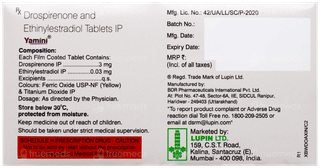


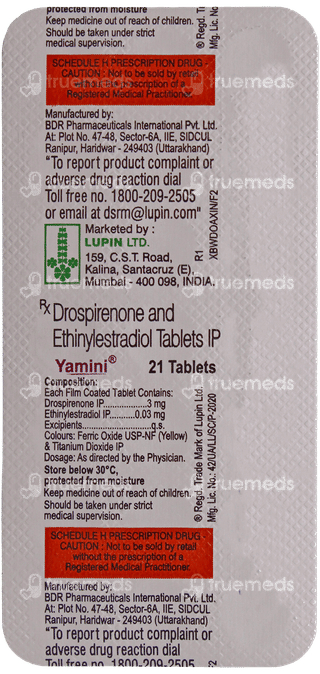



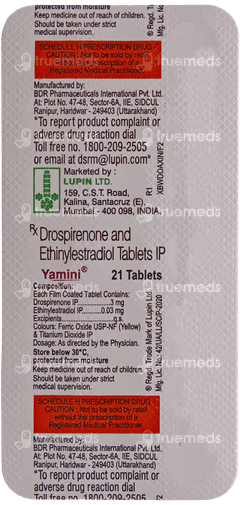

 Composition
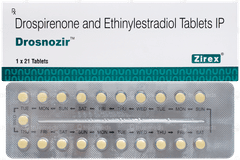
Yamini Tablet is primarily prescribed to prevent unintended pregnancy. It may also provide menstrual benefits, such as lighter bleeding, more regular withdrawal bleeds and reduced menstrual cramps. Some users may notice improvement in acne, although this should not be presented as an independently approved indication without product-specific confirmation. Treatment for premenstrual dysphoric disorder also requires an appropriately approved formulation and regimen. Your doctor will assess whether this contraceptive is suitable for your needs.
Take Yamini Tablet exactly as directed by your doctor, following the sequence provided with the 21-tablet pack. Swallow each tablet with water and maintain the prescribed schedule. Follow the product instructions for the tablet-free interval and starting subsequent packs. Missing tablets, vomiting or severe diarrhoea may reduce contraceptive protection. Follow the leaflet's missed-tablet instructions and ask about additional contraception when necessary. Do not change the treatment schedule independently.
Common side effects of Yamini Tablet include nausea, headache, breast tenderness, mood changes and irregular vaginal bleeding. Some users may experience bloating or changes in menstrual flow. Drospirenone can increase potassium levels in susceptible patients. Rare but serious complications include blood clots, stroke and heart attack. Seek emergency medical attention for chest pain, sudden breathlessness, one-sided leg swelling, severe headache or sudden visual disturbances. Report persistent mood changes or troublesome bleeding to your doctor.
Before taking Yamini Tablet, tell your doctor about previous blood clots, migraine with aura, uncontrolled hypertension, liver disease or breast cancer. Mention smoking, particularly if you are over 35 years old. Report kidney or adrenal disease and medicines that may increase potassium levels. Certain anticonvulsants and other medicines can reduce contraceptive effectiveness. Do not use Yamini during pregnancy. Discuss breastfeeding and the appropriate time to begin contraception after childbirth. Your doctor should assess your blood pressure and individual risk factors before prescribing it.